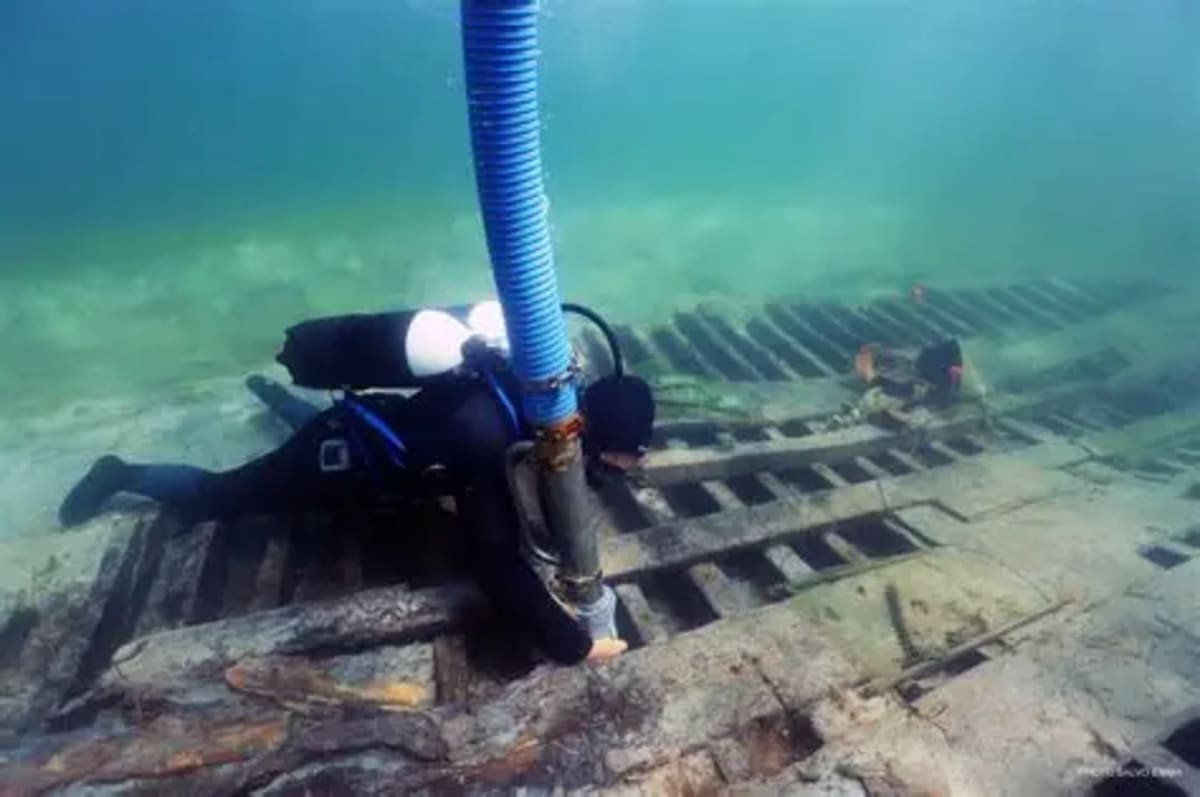
Italian authorities discovered an ancient Roman shipwreck off the coast near Civitavecchia, approximately 80 kilometers northwest of Rome. The merchant vessel had rested on the Mediterranean seabed for more than two thousand years, its cargo of hundreds of Roman amphorae remarkably well preserved.
The discovery, announced in July 2023, was made by Italy's Carabinieri cultural heritage protection unit in cooperation with underwater archaeology specialists. Using remotely operated underwater equipment, investigators located the wreck at a depth of approximately 160 meters. The vessel dates to the 2nd–1st century BC.
Most of the amphorae, identified as Dressel 1B types, were still intact. Investigators also identified two Roman metal anchor stocks near the wreck. Together, these discoveries provide valuable evidence of ancient Mediterranean maritime trade.
Roman shipwrecks are considered underwater archives. They preserve trade networks, food storage methods, maritime engineering, and daily life in the Roman Empire. This discovery adds to Italy’s extensive underwater archaeological record.
The Mediterranean still hides countless Roman stories. This shipwreck is one of them—resurfacing after two millennia to remind us how much history remains underwater.
Like the space ball on Forrest Beach, this Roman vessel reminds readers that mysteries don’t only wash ashore—some wait centuries beneath the sea.
If you enjoy real mysteries like this, explore my Legends & Lore series, where history, folklore, and long-buried secrets come together. Or step into a world of greater danger with my historical adventure thriller, Enigma: The Alchemist's Legacy.